
Overview of the West Valley Demonstration Project
April 30, 2026
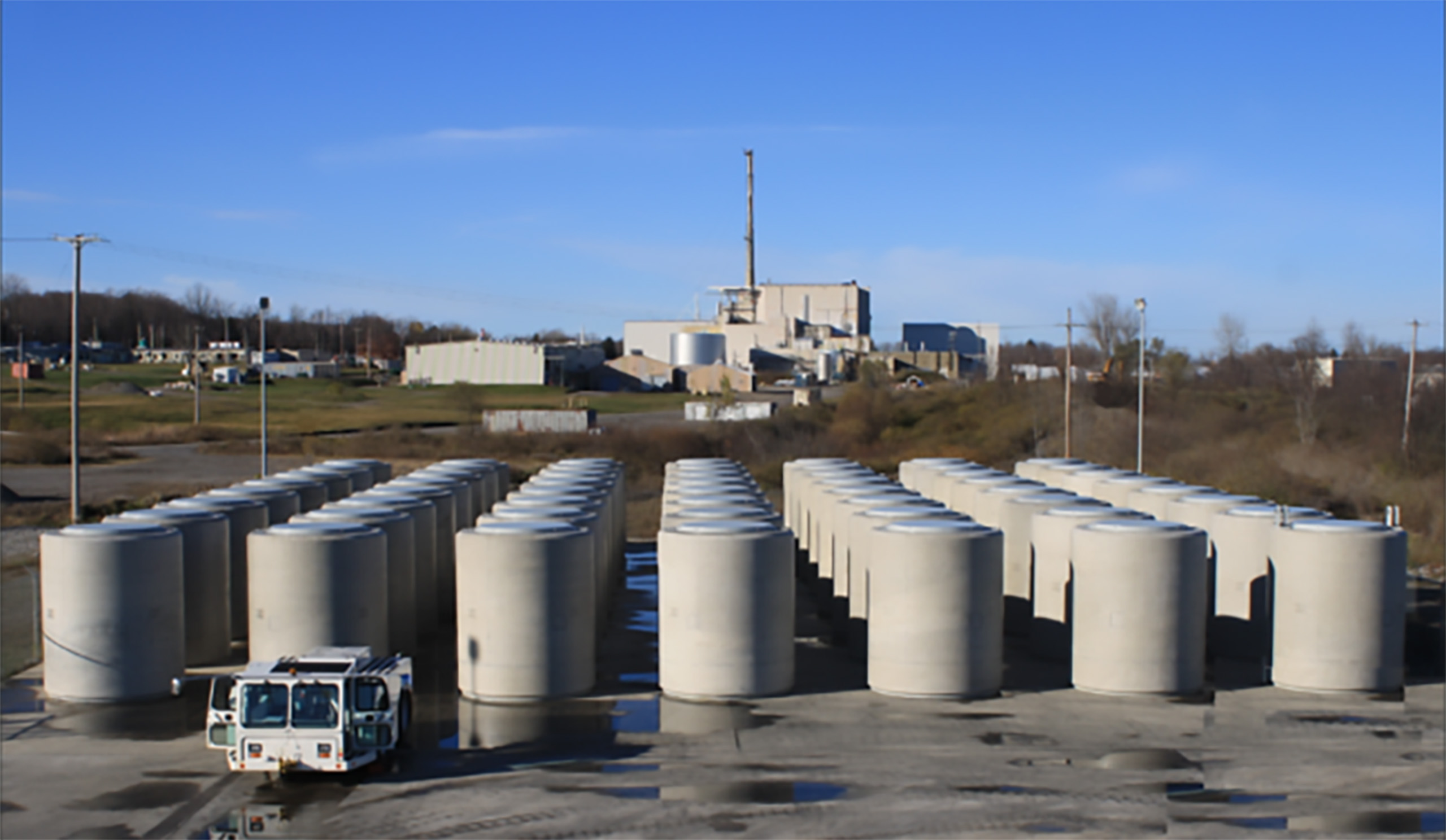
The West Valley Demonstration Project (WVDP) is the federal–state program at the Western New York Nuclear Service Center (WNYNSC) south of Buffalo, where Cold War–era reprocessing left high-level liquid waste in underground tanks and a large industrial footprint to conted with. SOMEWHERE ANSWERS sees this site as an origin node in a wider geography of waste movement.
The 1980 West Valley Demonstration Project Act
In 1980 Congress passed the West Valley Demonstration Project Act, directing the U.S. Department of Energy (DOE) to run, with New York State, a demonstration of high-level waste solidification and eventual decommissioning at West Valley. This was a set of jobs: solidify tanked high-level waste, develop containers suitable for disposal, ship solidified high-level waste to a federal repository when one is available, handle low-level and transuranic waste streams, and decontaminate and decommission the facilities. The U.S. Government Accountability Office has reviewed how DOE schedules and reports this work. GAO-21-115 (2021).
Cooperative Agreement
As required by the Act, DOE and NYSERDA (the New York State Energy Research and Development Authority) entered into a Cooperative Agreement in November 1980 to carry out the statute. Under that framework, DOE leads day-to-day project management and holds exclusive use of roughly 175 acres of project premises, including the major process buildings—while NYSERDA stays engaged on behalf of the State, helps steward the balance of the WNYNSC property around the federal project footprint, and (with DEC and others) represents New York’s interests in planning and oversight. The State-Licensed Disposal Area sits outside DOE’s exclusive-use envelope in a way that matters for liability and long-term care—details NYSERDA’s program pages spell out for stakeholders.
DOE leads current day-to-day project management and holds exclusive use of roughly 175 acres of project premises
Radioactive Waste Status
Solidification of high-level waste from the tanks was completed in 2002. NYSERDA’s public accounting describes more than 98 percent of the liquid high-level waste removed from the underground tanks and immobilized into roughly 19,000 drums of cemented low-level waste and 275 high-level waste glass canisters. The cemented drums were shipped off for disposal. The vitrified canisters, in stainless-shipping casks, were removed from the former reprocessing plant to an interim storage pad, and are still awaiting a federal repository. Asbestos abatement, demolition of the vitrification complex, and decommissioning are still in progress.