
BEHEMOTH as Inspiration
Apr 29, 2026
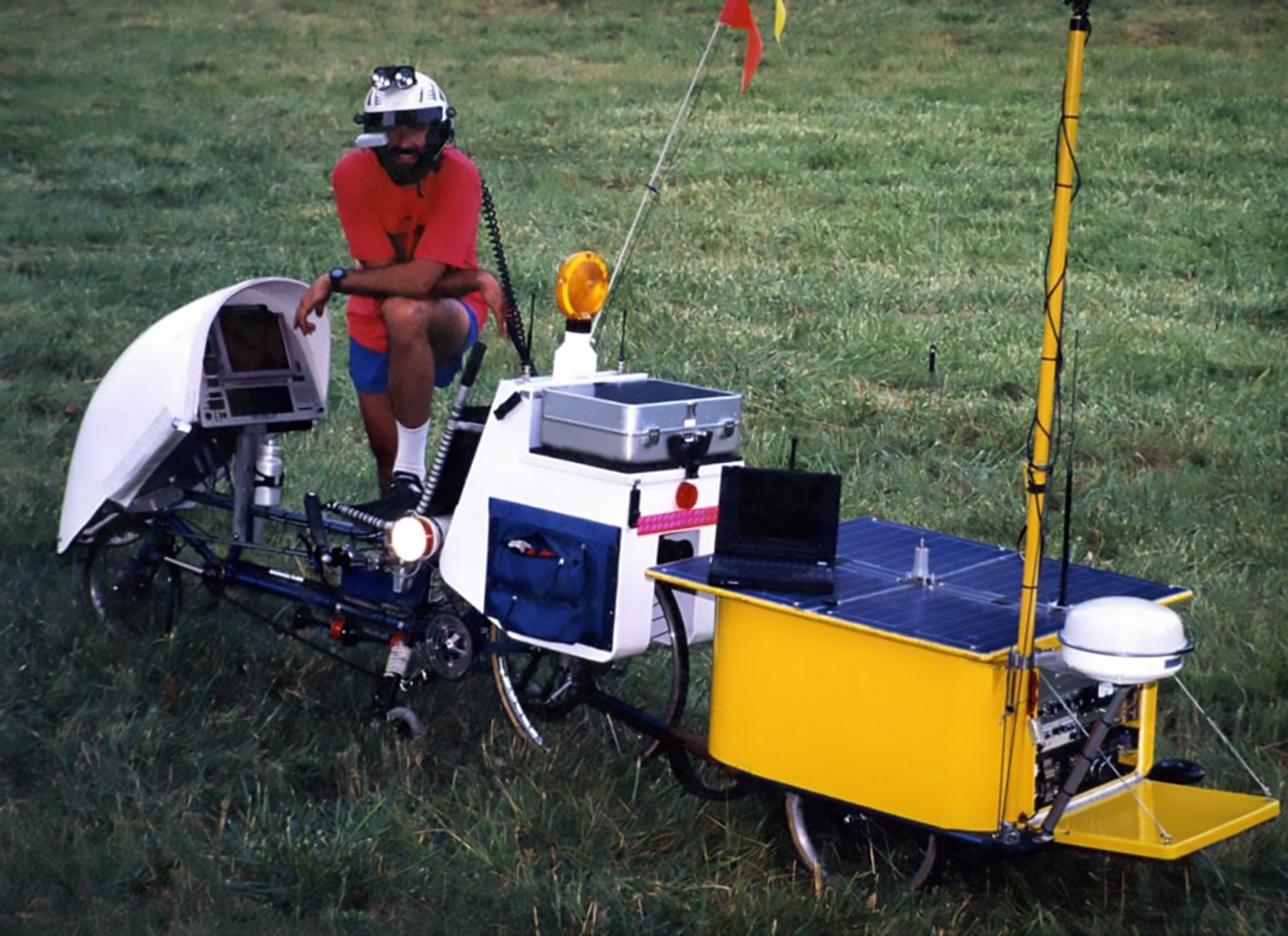
Giant SLOTH draws from Steven K. Roberts’ BEHEMOTH (1989–1992), a human-powered mobile lab that fused sensing, communication, computation.
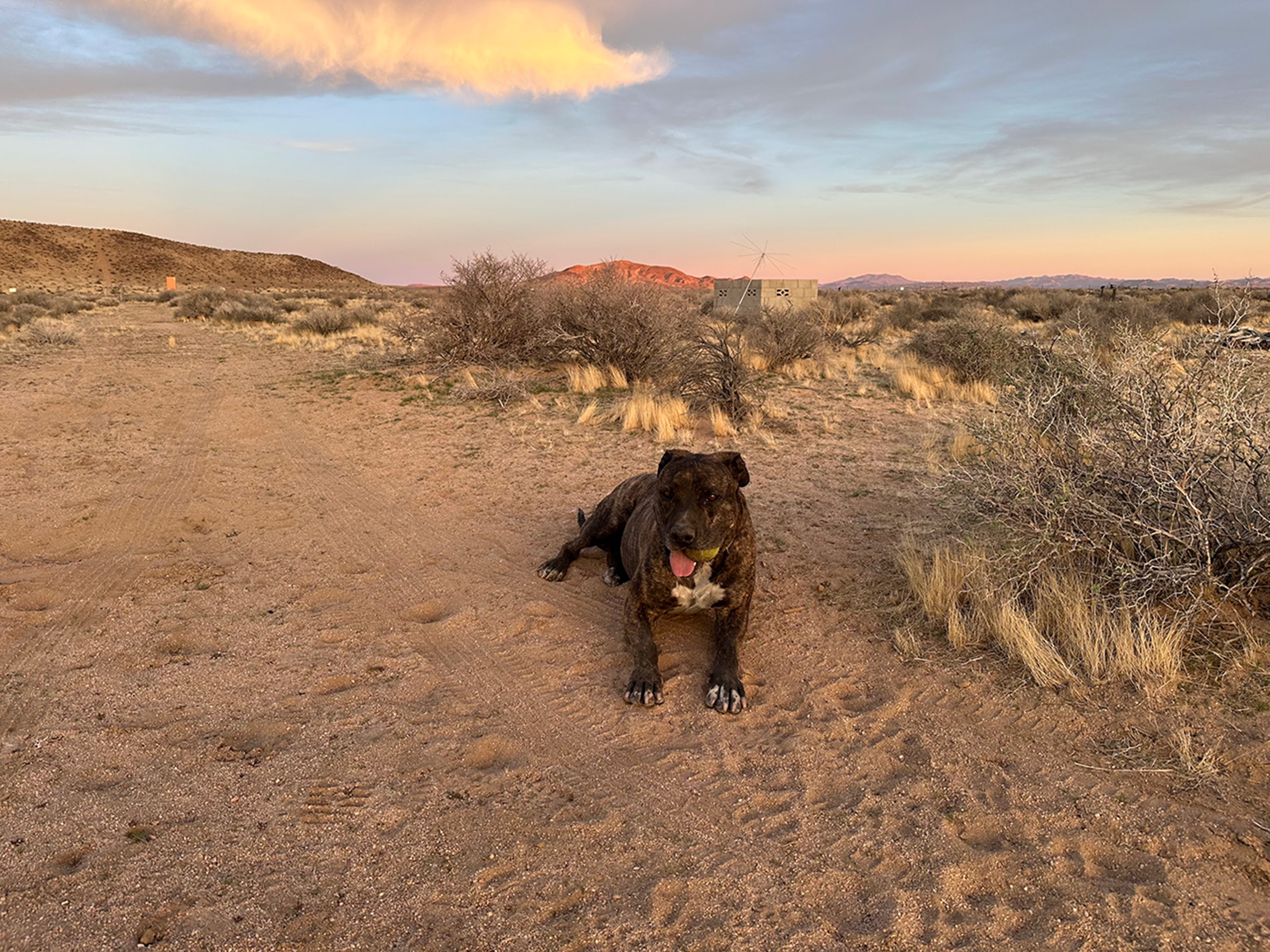
The Giant SLOTH (S.low L.ocomotion & O.ppositional T.actical H.abitat) is a human-powered sensing platform composed of a bicycle and tow-behind equipment trailer and occasional dog navigator named “Sonic Boom.”
Giant SLOTH carries radio-frequency receivers, binoculars, night-vision systems, 3D scanners, recording devices, and camping equipment required to remain in place for extended periods. It is built for slow movements at the edge of restricted sites.
Giant SLOTH operates as a sensory instrument array within the Shadow Mountain framework, supporting work across landscapes, aeroscapes, and exoscapes, and assumes that all environments are already conditions of limited visibility and intermittent signal. Giant SLOTH works within Shadow Mountain’s ideas of fragment, noise, and drift rather than assembling and normalizing completionist datasets.
In the Shadow Mountain ecosystem of fragments, noises, and drifts, Giant SLOTH functions as an ecstatic polygraph, an instrument for recording what cannot be stabilized or fully verified.
Drawing on Werner Herzog’s concept of ecstatic truth, Giant SLOTH prioritizes a deeper, constructed understanding that emerges through accumulations, misalignments, and interpretations rather than strict fact/fiction binaries and fidelity treadmills of resolution, clarity, and information density. Ecstatic signals are unclean, ecstatic observations are contingent, and ecstatic perception is fuzzy. As a polygraph, or a machine for recording ecstatic truth, Giant SLOTH embraces and articulates the limits of perception and the conditions of uncertainty.
In exhibition spaces, Giant SLOTH is outfitted with an integrated audio and video system that allows it to function as a self-contained sculptural viewing and listening environment, where field-gathered data is often experienced through the same apparatus that captured it. Video clips, radio recordings, and spatial data are presented across multiple LCD panels mounted on the bicycle and trailer, accompanied by amplified sound from onboard speakers. Media playback is managed by Raspberry Pi modules, and Arduino-based sensor systems enable responsive interactions tied to wheel movement and proximity. LED lighting provides additional illumination.
Bikepacking places Giant SLOTH within threat categories that security threat models recognize as benign. This sometimes allows the bicycle to move through spaces without triggering the thresholds of suspicion that grip public space. The bicycle, the gear, and the slow, continuous movement align with established patterns of recreational use. The bicycle can encounter, stop, sense, and interpret at the margins permitted by the system.
Giant SLOTH was developed, prototyped, and field tested along the perimeter of Edwards Air Force Base in 2023 and 2024 during the research and data collection phase of my work with the Center for Land Use Interpretation (CLUI) for the Remote Sensing exhibition as part of Getty PST ART 2024-2025 Art & Science Collide. It was used to navigate Edward’s AFB boundaries and interpret radio-frequency recordings and 3D scans throughout the surrounding region.